
About Cyanotype
Slow Photography
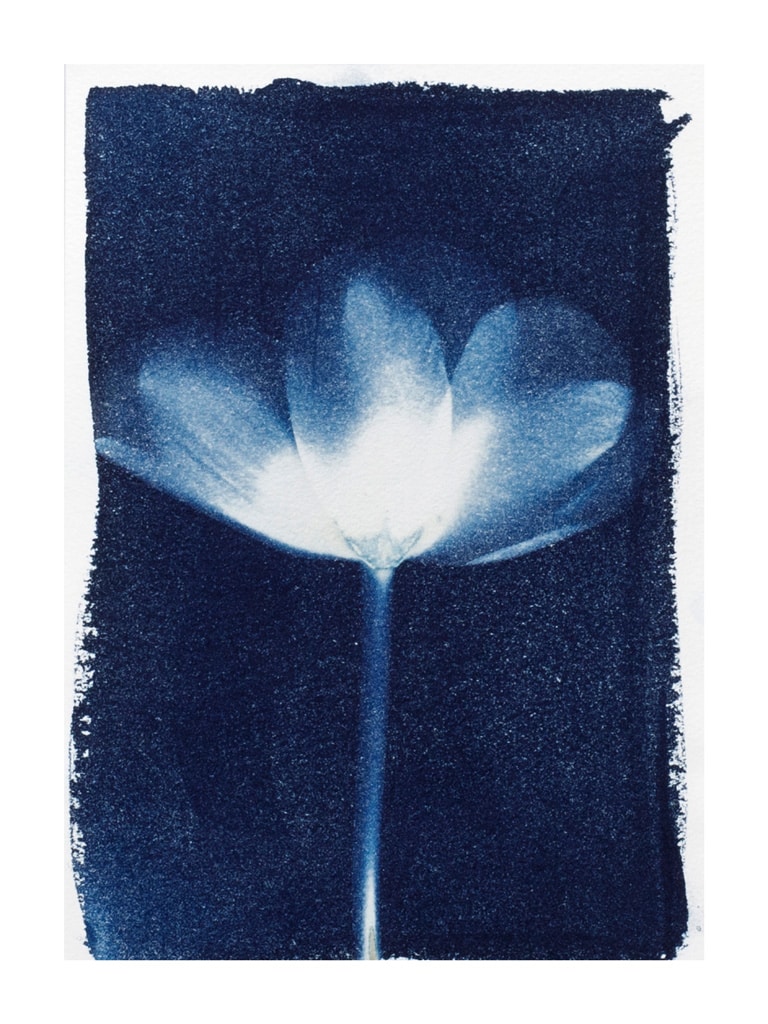
Then summer arrived, and I made the most of the sunny hours for the first time this year. Tulips from my little patch of garden have now become a few cyanotype prints.
Cyanotypes are always blue because of the process. And they’re always unique little works of art. For me, it’s so fascinating to watch the image emerge—like little miracles. Little wonders… little blue beauties.
Cyanotopy is contemplation and slowness
Each sheet of paper is hand-painted or treated with a UV-sensitive emulsion.
This is contact printing. And the image is never larger than the subject.
Place the object directly on the paper, put it in the sun, and then expose it for 10–20 minutes, depending on the weather.
I usually expose for 15–20 minutes. During the winter, my exposure times can be as long as 70 minutes.
When the exposure time is over, the subject is removed and the paper is rinsed in water. This develops the image, and you can see the result.
The types of paper used for these images are Arches watercolor paper (300 g/m²) and 320 g/m² handmade paper from Khadimill in southern India.

It’s very difficult to predict the outcome of cyanotype prints because I work exclusively with the sun’s rays. If a cloud passes in front of the sun, if the paper or emulsion mixture is even a microgram different from the last time I made prints, or if the plant or object has been pressed, or is freshly picked, or depending on how thick or thin the plant’s stem is, or the feather, or whichever natural material I choose—all of these factors can affect the result.
But it’s also the unpredictability that’s so fascinating—the deep blue color that emerges when the photo is developed, the textural quality of the image, and the slow pace of the process. The imperfect perfection…
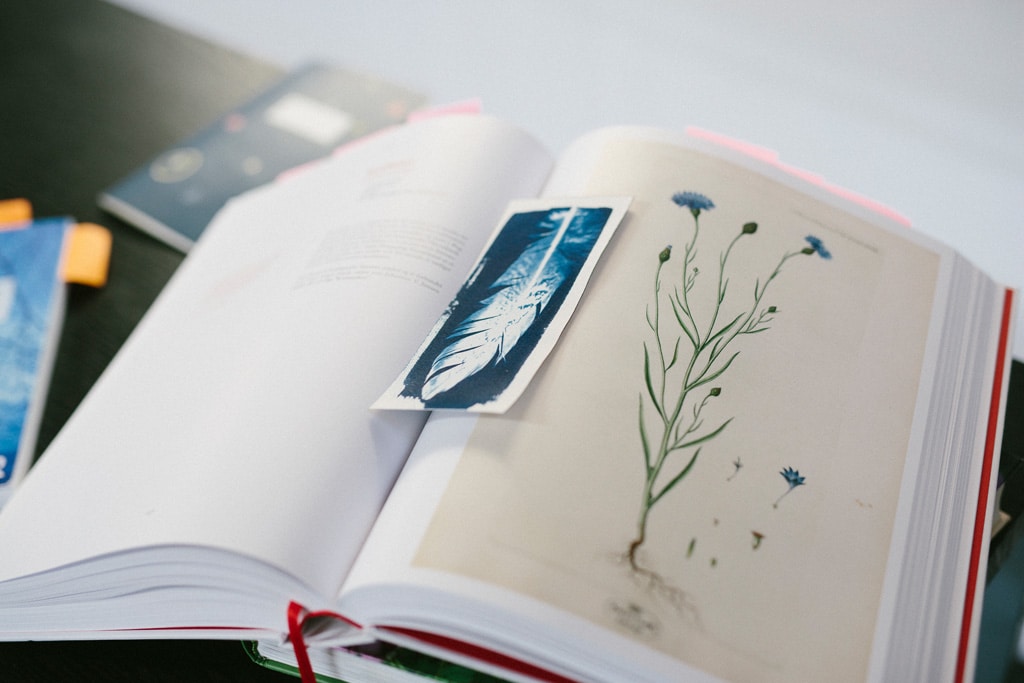
Flora Danica, one of my favorite books for inspiration when making cyanotypes and for my garden.
The impatient wait for a sunny day, for having enough paper, for having the right paper, for having enough chemicals to prepare more paper for more pictures, for finding the right plants, the hunt for the right plants. Looking curiously at what’s along a roadside ditch, on a forest floor, or in my own garden. Which leaves are best suited, and then heading home to test them. And what you think is the most perfect—because it looks beautiful to the naked eye—but in reality, it’s the other leaf from a plant you just happened to pick up that turns out to have exactly the right look—a look you didn’t even know was the right one. Because when you see it there on the paper—after 15 minutes of exposure to the sun, development in water, and drying—there it was.
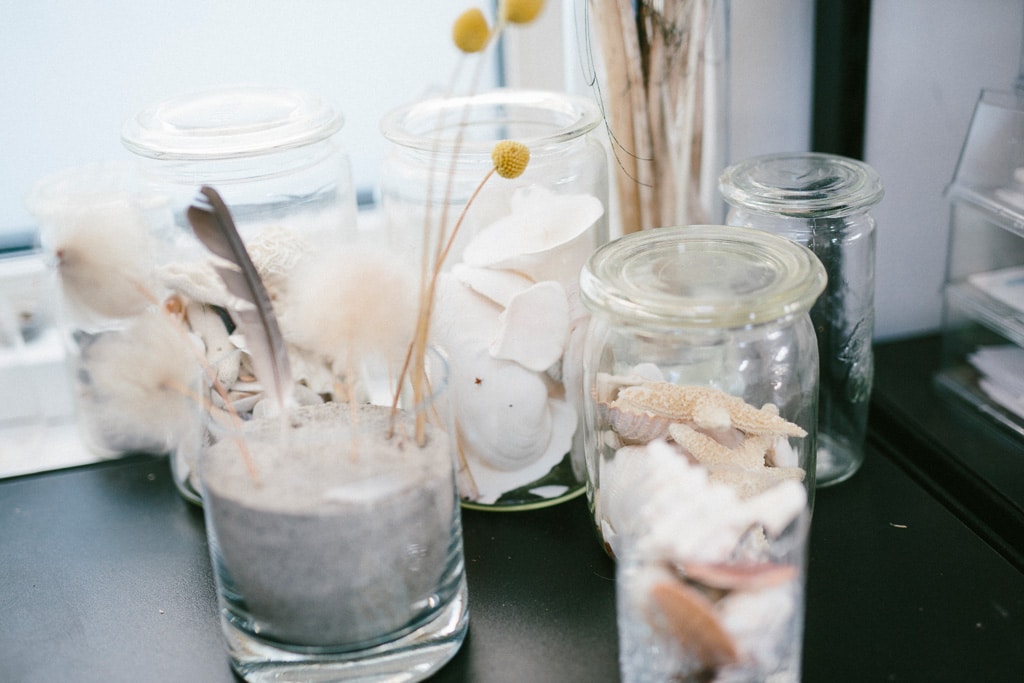
And then you want more—the next leaf, more leaves, or feathers… which feather is best? Is it the completely black one, the completely white one, or the ones with patterns? Or the innermost feathers, the ones with down…
I never get tired of exploring textures, fabrics, structures, and patterns that can be turned into images… That’s mindfulness photography.
CyanoTYPE Blues
– and every note in between
All images are available only in shades of cyan-blue, and all are originals—there is only one copy of each.